Triheptanoin
Triheptanoin is a synthetic odd-chain medium-chain triglyceride (C7 fatty acid ester of glycerol) that is hydrolyzed to heptanoate, which undergoes anaplerotic metabolism to generate propionyl-CoA and acetyl-CoA, replenishing the Krebs cycle intermediates (anaplerosis) and providing an alternative energy substrate to glucose in metabolically compromised tissues. It is approved for long-chain fatty acid oxidation disorders (LC-FAOD) to reduce cardiomyopathy, myopathy, and hypoglycemic episodes, and is under investigation for pyruvate carboxylase deficiency, Huntington's disease, and heart failure. Its unique anaplerotic mechanism addresses fundamental energy metabolism defects in these conditions.
आणविक भार
428.6000 g/mol
LogP
7.30
TPSA
78.90 Ų
लिपिंस्की RO5
उत्तीर्ण
चिकित्सीय क्षेत्र
Pharmacokinetics (PK)
Pharmacodynamics (PD)
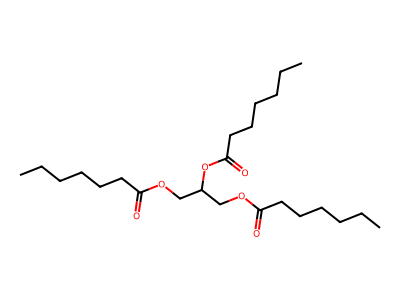
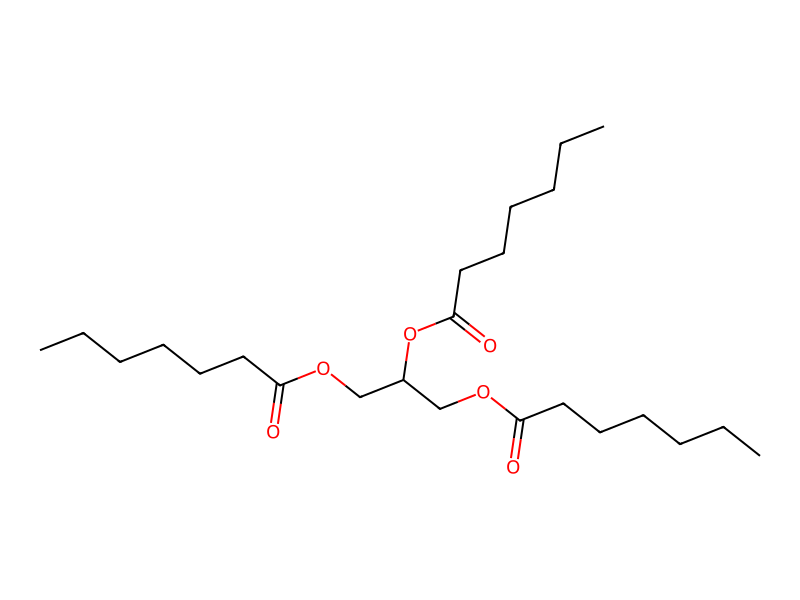
2D संरचना
Cite this structure
Embed this structure
SMILES
CCCCCCC(=O)OCC(COC(=O)CCCCCC)OC(=O)CCCCCC
InChI
InChI=1S/C24H44O6/c1-4-7-10-13-16-22(25)28-19-21(30-24(27)18-15-12-9-6-3)20-29-23(26)17-14-11-8-5-2/h21H,4-20H2,1-3H3
Molecular Formula
C24H44O6
HBD / HBA
- / 6
घूर्णनीय बंधन
23
भारी परमाणु
30
No targets recorded
Target interaction data is not yet available for this drug.
No interactions recorded
Drug interaction data is not yet available for this compound.
No side effects recorded
Side effect data is not yet available for this drug.
अक्सर पूछे जाने वाले प्रश्न
Triheptanoin is a synthetic odd-chain medium-chain triglyceride (C7 fatty acid ester of glycerol) that is hydrolyzed to heptanoate, which undergoes anaplerotic metabolism to generate propionyl-CoA and acetyl-CoA, replenishing the Krebs cycle intermediates (anaplerosis) and providing an alternative energy substrate to glucose in metabolically compromised tissues. It is approved for long-chain fatty acid oxidation disorders (LC-FAOD) to reduce cardiomyopathy, myopathy, and hypoglycemic episodes, and is under investigation for pyruvate carboxylase deficiency, Huntington's disease, and heart failure. Its unique anaplerotic mechanism addresses …
Yes, Triheptanoin is an approved drug. It has reached clinical phase 4. It is classified as a Small molecule.
References & Data Sources
- ChEMBL — European Bioinformatics Institute (EBI). CHEMBL4297585. Open-access bioactivity database.
- PubChem — National Center for Biotechnology Information (NCBI). CID 69286. Chemical information database.
Data aggregated from publicly available pharmacological databases. Last updated 2026-03-28.
Embed This Widget
Add the script tag and a data attribute to embed this widget.
<script src="https://cdn.jsdelivr.net/npm/drugfyi-embed@1/dist/embed.min.js" defer></script>
<div data-drugfyi="drug" data-slug="triheptanoin"></div>Embed via iframe for maximum compatibility.
<iframe src="https://drugfyi.com/iframe/drug/triheptanoin/" width="420" height="400" frameborder="0" style="border:0;border-radius:10px;max-width:100%" loading="lazy"></iframe>Paste this URL in WordPress, Medium, or any oEmbed-compatible platform.
https://drugfyi.com/drug/triheptanoin/Add a dynamic SVG badge to your README or docs.
[](https://drugfyi.com/drug/triheptanoin/)Use the native HTML custom element.
<script src="https://cdn.jsdelivr.net/npm/drugfyi-embed@1/dist/embed.min.js" defer></script>
<drugfyi-drug slug="triheptanoin"></drugfyi-drug>