Cupric Sulfate
An inorganic copper salt used as a source of copper in parenteral nutrition and historically as an emetic and antidote for phosphorus poisoning. It plays a role as a trace mineral essential for enzyme function.
Berat Molekul
159,6100 g/mol
TPSA
88,60 Ų
Pharmacokinetics (PK)
Pharmacodynamics (PD)
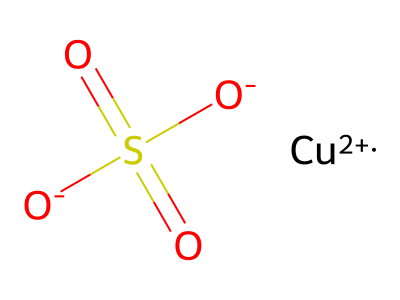
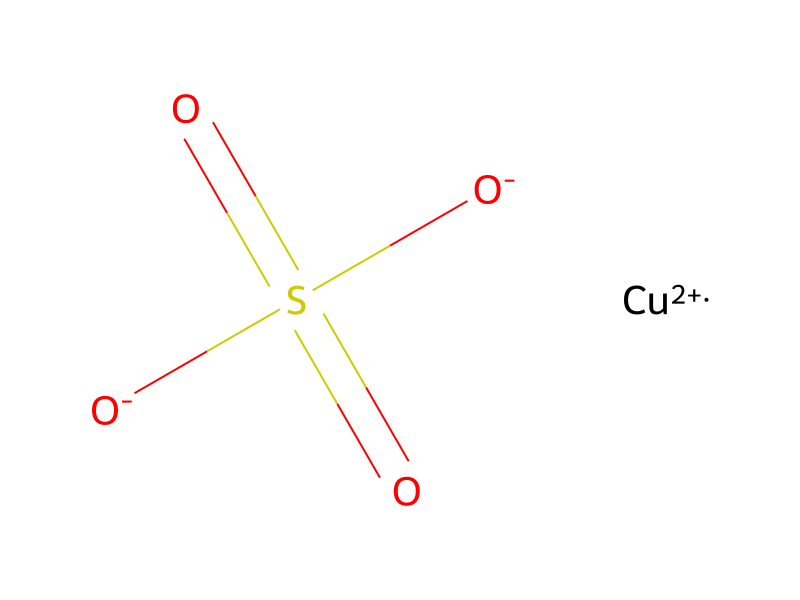
Struktur 2D
Cite this structure
Embed this structure
SMILES
[O-]S(=O)(=O)[O-].[Cu+2]
InChI
InChI=1S/Cu.H2O4S/c;1-5(2,3)4/h;(H2,1,2,3,4)/q+2;/p-2
Molecular Formula
CuO4S
HBD / HBA
- / 4
Ikatan yang Dapat Dirotasi
0
Atom Berat
6
No targets recorded
Target interaction data is not yet available for this drug.
No interactions recorded
Drug interaction data is not yet available for this compound.
No side effects recorded
Side effect data is not yet available for this drug.
Pertanyaan yang Sering Diajukan
An inorganic copper salt used as a source of copper in parenteral nutrition and historically as an emetic and antidote for phosphorus poisoning. It plays a role as a trace mineral essential for enzyme function.
Yes, Cupric Sulfate is an approved drug. It has reached clinical phase 4. It is classified as a Small molecule.
References & Data Sources
- ChEMBL — European Bioinformatics Institute (EBI). CHEMBL604. Open-access bioactivity database.
- PubChem — National Center for Biotechnology Information (NCBI). CID 24462. Chemical information database.
Data aggregated from publicly available pharmacological databases. Last updated 2026-08-20.
Embed This Widget
Add the script tag and a data attribute to embed this widget.
<script src="https://cdn.jsdelivr.net/npm/drugfyi-embed@1/dist/embed.min.js" defer></script>
<div data-drugfyi="drug" data-slug="cupric-sulfate"></div>Embed via iframe for maximum compatibility.
<iframe src="https://drugfyi.com/iframe/drug/cupric-sulfate/" width="420" height="400" frameborder="0" style="border:0;border-radius:10px;max-width:100%" loading="lazy"></iframe>Paste this URL in WordPress, Medium, or any oEmbed-compatible platform.
https://drugfyi.com/drug/cupric-sulfate/Add a dynamic SVG badge to your README or docs.
<a href="https://drugfyi.com/drug/cupric-sulfate/" rel="nofollow noopener"><img src="https://drugfyi.com/badge/entity/cupric-sulfate.svg" alt="DrugFYI"></a>Use the native HTML custom element.
<script src="https://cdn.jsdelivr.net/npm/drugfyi-embed@1/dist/embed.min.js" defer></script>
<drugfyi-drug slug="cupric-sulfate"></drugfyi-drug>