Dexpanthenol
The d-isomer of pantothenol (provitamin B5) that is converted to pantothenic acid in the body, used topically as a moisturizer and wound-healing agent, and parenterally to stimulate bowel motility after surgery. It supports synthesis of coenzyme A and promotes skin barrier function.
Berat Molekul
205,2500 g/mol
LogP
-0,90
TPSA
89,80 Ų
Lipinski RO5
Lulus
Mekanisme Kerja
Forms an occlusive barrier on the skin surface, reducing transepidermal water loss and protecting the underlying tissue from external irritants.
Pharmacokinetics (PK)
Pharmacodynamics (PD)
Forms an occlusive barrier on the skin surface, reducing transepidermal water loss and protecting the underlying tissue from external irritants.
Struktur 2D
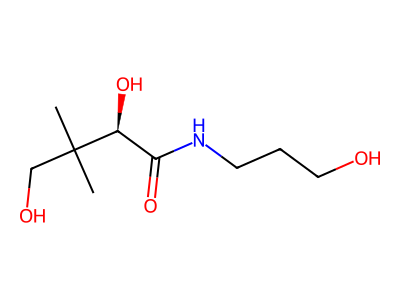
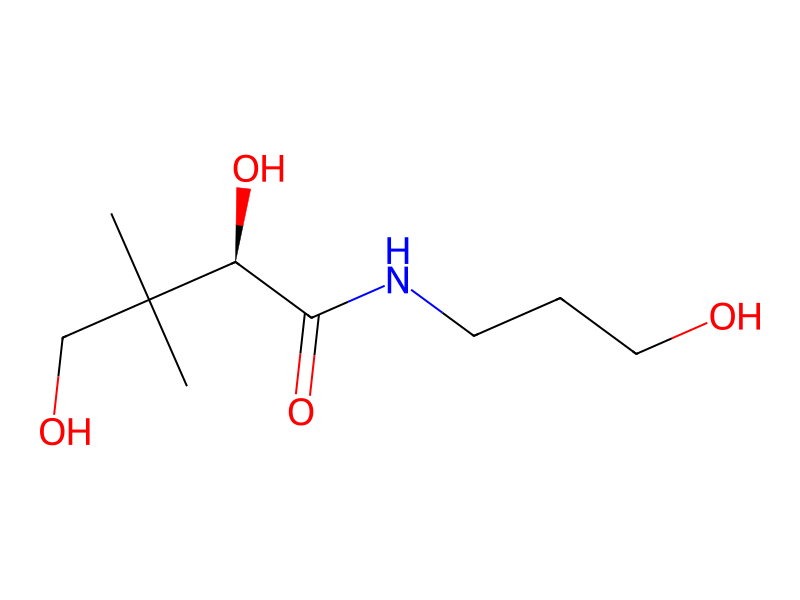
Cite this structure
Embed this structure
SMILES
CC(C)(CO)[C@@H](O)C(=O)NCCCO
InChI
InChI=1S/C9H19NO4/c1-9(2,6-12)7(13)8(14)10-4-3-5-11/h7,11-13H,3-6H2,1-2H3,(H,10,14)/t7-/m0/s1
Molecular Formula
C9H19NO4
HBD / HBA
4 / 4
Ikatan yang Dapat Dirotasi
6
Atom Berat
14
No targets recorded
Target interaction data is not yet available for this drug.
No interactions recorded
Drug interaction data is not yet available for this compound.
No side effects recorded
Side effect data is not yet available for this drug.
Pertanyaan yang Sering Diajukan
The d-isomer of pantothenol (provitamin B5) that is converted to pantothenic acid in the body, used topically as a moisturizer and wound-healing agent, and parenterally to stimulate bowel motility after surgery. It supports synthesis of coenzyme A and promotes skin barrier function.
Forms an occlusive barrier on the skin surface, reducing transepidermal water loss and protecting the underlying tissue from external irritants.
Yes, Dexpanthenol is an approved drug. It has reached clinical phase 4. It is classified as a Small molecule.
References & Data Sources
- ChEMBL — European Bioinformatics Institute (EBI). CHEMBL1200979. Open-access bioactivity database.
- PubChem — National Center for Biotechnology Information (NCBI). CID 131204. Chemical information database.
Data aggregated from publicly available pharmacological databases. Last updated 2026-03-04.
Embed This Widget
Add the script tag and a data attribute to embed this widget.
<script src="https://cdn.jsdelivr.net/npm/drugfyi-embed@1/dist/embed.min.js" defer></script>
<div data-drugfyi="drug" data-slug="dexpanthenol"></div>Embed via iframe for maximum compatibility.
<iframe src="https://drugfyi.com/iframe/drug/dexpanthenol/" width="420" height="400" frameborder="0" style="border:0;border-radius:10px;max-width:100%" loading="lazy"></iframe>Paste this URL in WordPress, Medium, or any oEmbed-compatible platform.
https://drugfyi.com/drug/dexpanthenol/Add a dynamic SVG badge to your README or docs.
<a href="https://drugfyi.com/drug/dexpanthenol/" rel="nofollow noopener"><img src="https://drugfyi.com/badge/entity/dexpanthenol.svg" alt="DrugFYI"></a>Use the native HTML custom element.
<script src="https://cdn.jsdelivr.net/npm/drugfyi-embed@1/dist/embed.min.js" defer></script>
<drugfyi-drug slug="dexpanthenol"></drugfyi-drug>