Lithium Carbonate
Delivered as a simple carbonate salt (Li2CO3), lithium is the lightest metallic element to serve as a medicine, and it remains a benchmark mood stabilizer. It treats and helps prevent the manic and depressive episodes of bipolar disorder, acting through modulation of intracellular signaling, including effects on inositol turnover and inhibition of the enzyme GSK-3. Because it is a small ion (molecular weight near 74) that is filtered and handled by the kidneys much like sodium, its blood level is sensitive to hydration, salt intake, and renal function, and it carries a narrow margin between therapeutic and toxic concentrations. A half-life of roughly 18 to 36 hours and routine level monitoring characterize its use. Lithium is an approved agent that has anchored bipolar treatment for generations.
A mood-stabilizing element used as lithium salts to treat and prevent episodes of mania, depression, and bipolar disorder, and studied for potential neuroprotective effects in Alzheimer's disease. It modulates multiple neurotransmitter systems and intracellular signaling pathways.
Masse moléculaire
73,8910 g/mol
TPSA
0,00 Ų
Aires thérapeutiques
Classes de médicaments
Mécanisme d'action
Modulates intracellular signaling via inositol and GSK-3 inhibition.
Pharmacokinetics (PK)
Pharmacodynamics (PD)
Modulates intracellular signaling via inositol and GSK-3 inhibition.
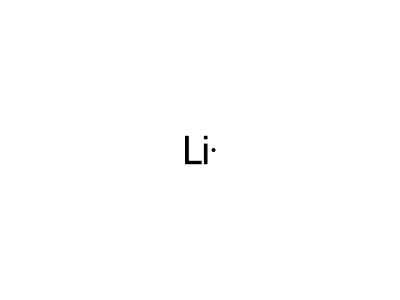
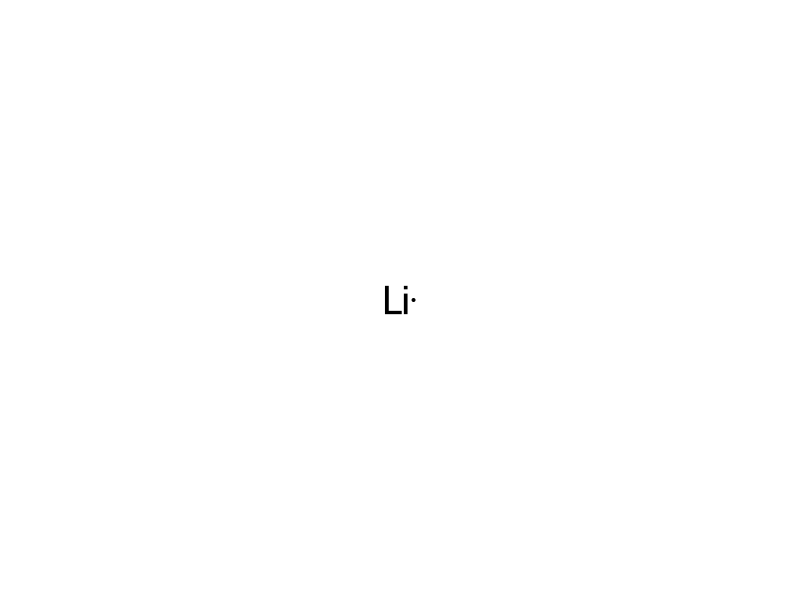
Structure 2D
Cite this structure
Embed this structure
SMILES
[Li]
InChI
InChI=1S/Li
Molecular Formula
Li2CO3
HBD / HBA
- / -
Liaisons Rotatives
0
Atomes Lourds
1
No targets recorded
Target interaction data is not yet available for this drug.
Ramipril, an ACE inhibitor, reduces lithium renal clearance through decreased glomerular filtration, leading to potentially toxic lithium accumulation.
Spironolactone increases renal lithium reabsorption by promoting distal tubular sodium retention, leading to lithium toxicity.
Naproxen, like all NSAIDs, reduces renal prostaglandin synthesis, impairing lithium excretion and causing lithium toxicity.
Furosemide-induced sodium depletion stimulates compensatory proximal tubular reabsorption of both sodium and lithium, raising lithium levels into the toxic range.
ACE inhibitors like lisinopril reduce renal lithium excretion, causing potentially dangerous lithium toxicity.
Thiazide diuretics increase lithium reabsorption in the proximal renal tubule, reliably causing lithium toxicity without dose adjustment.
NSAIDs markedly increase lithium plasma levels, potentially causing lithium toxicity (tremor, ataxia, confusion, cardiac arrhythmias).
Escitalopram combined with lithium may augment serotonergic neurotransmission, increasing the risk of serotonin syndrome particularly at higher doses.
Diltiazem (calcium channel blocker) combined with lithium may increase risk of lithium toxicity and neurotoxic adverse effects including bradycardia.
Concurrent fluoxetine and lithium may increase serotonin syndrome risk; fluoxetine may also alter lithium pharmacokinetics in some patients.
No side effects recorded
Side effect data is not yet available for this drug.
Foire aux questions
A mood-stabilizing element used as lithium salts to treat and prevent episodes of mania, depression, and bipolar disorder, and studied for potential neuroprotective effects in Alzheimer's disease. It modulates multiple neurotransmitter systems and intracellular signaling pathways.
Modulates intracellular signaling via inositol and GSK-3 inhibition.
Key pharmacokinetic parameters for Lithium Carbonate: Half-life: 18-36 hours.
Yes, Lithium Carbonate is an approved drug. It has reached clinical phase 4. It is classified as a Small molecule.
Related Drugs
References & Data Sources
- PubChem — National Center for Biotechnology Information (NCBI). CID 3028194. Chemical information database.
Data aggregated from publicly available pharmacological databases. Last updated 2026-03-04.
Embed This Widget
Add the script tag and a data attribute to embed this widget.
<script src="https://cdn.jsdelivr.net/npm/drugfyi-embed@1/dist/embed.min.js" defer></script>
<div data-drugfyi="drug" data-slug="lithium"></div>Embed via iframe for maximum compatibility.
<iframe src="https://drugfyi.com/iframe/drug/lithium/" width="420" height="400" frameborder="0" style="border:0;border-radius:10px;max-width:100%" loading="lazy"></iframe>Paste this URL in WordPress, Medium, or any oEmbed-compatible platform.
https://drugfyi.com/drug/lithium/Add a dynamic SVG badge to your README or docs.
[](https://drugfyi.com/drug/lithium/)Use the native HTML custom element.
<script src="https://cdn.jsdelivr.net/npm/drugfyi-embed@1/dist/embed.min.js" defer></script>
<drugfyi-drug slug="lithium"></drugfyi-drug>