Glycine
The simplest amino acid, used as a nutritional supplement and investigated for potential roles in treating neurological conditions such as Alzheimer's disease and bipolar disorder by modulating NMDA receptor activity in the brain. It serves as an inhibitory neurotransmitter in the spinal cord and brainstem and participates in the synthesis of proteins, creatine, and porphyrins. Research continues to explore its therapeutic potential across multiple conditions.
Peso Molecular
75,0700 g/mol
LogP
-3,20
TPSA
63,30 Ų
Regra dos 5 de Lipinski
Aprovado
Áreas Terapêuticas
Pharmacokinetics (PK)
Pharmacodynamics (PD)
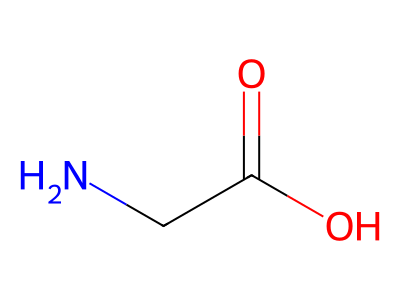
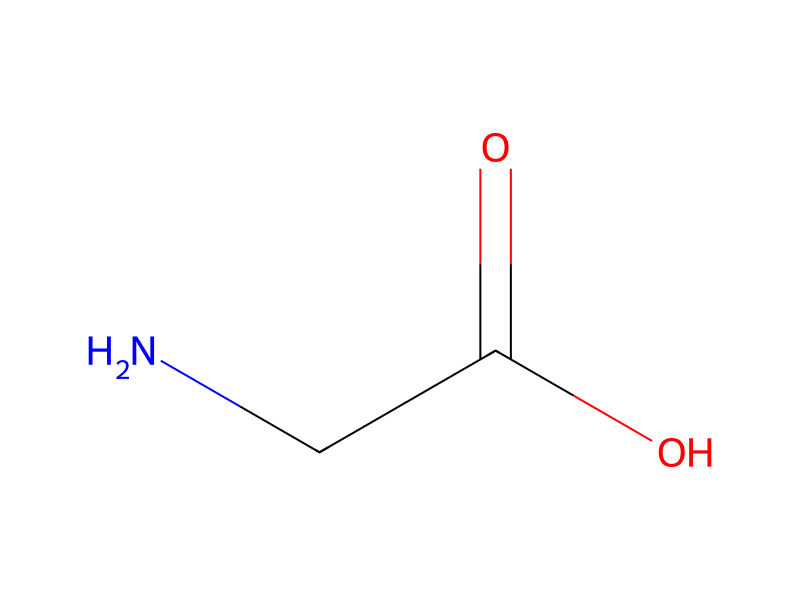
Estrutura 2D
Cite this structure
Embed this structure
SMILES
NCC(=O)O
InChI
InChI=1S/C2H5NO2/c3-1-2(4)5/h1,3H2,(H,4,5)
Molecular Formula
C2H5NO2
HBD / HBA
2 / 3
Ligações Rotacionáveis
1
Átomos Pesados
5
No targets recorded
Target interaction data is not yet available for this drug.
No interactions recorded
Drug interaction data is not yet available for this compound.
No side effects recorded
Side effect data is not yet available for this drug.
Perguntas frequentes
The simplest amino acid, used as a nutritional supplement and investigated for potential roles in treating neurological conditions such as Alzheimer's disease and bipolar disorder by modulating NMDA receptor activity in the brain. It serves as an inhibitory neurotransmitter in the spinal cord and brainstem and participates in the synthesis of proteins, creatine, and porphyrins. Research continues to explore its therapeutic potential across multiple conditions.
Yes, Glycine is an approved drug. It has reached clinical phase 4. It is classified as a Small molecule.
References & Data Sources
- ChEMBL — European Bioinformatics Institute (EBI). CHEMBL773. Open-access bioactivity database.
- PubChem — National Center for Biotechnology Information (NCBI). CID 750. Chemical information database.
Data aggregated from publicly available pharmacological databases. Last updated 2026-03-04.
Embed This Widget
Add the script tag and a data attribute to embed this widget.
<script src="https://cdn.jsdelivr.net/npm/drugfyi-embed@1/dist/embed.min.js" defer></script>
<div data-drugfyi="drug" data-slug="glycine"></div>Embed via iframe for maximum compatibility.
<iframe src="https://drugfyi.com/iframe/drug/glycine/" width="420" height="400" frameborder="0" style="border:0;border-radius:10px;max-width:100%" loading="lazy"></iframe>Paste this URL in WordPress, Medium, or any oEmbed-compatible platform.
https://drugfyi.com/drug/glycine/Add a dynamic SVG badge to your README or docs.
<a href="https://drugfyi.com/drug/glycine/" rel="nofollow noopener"><img src="https://drugfyi.com/badge/entity/glycine.svg" alt="DrugFYI"></a>Use the native HTML custom element.
<script src="https://cdn.jsdelivr.net/npm/drugfyi-embed@1/dist/embed.min.js" defer></script>
<drugfyi-drug slug="glycine"></drugfyi-drug>