Trientine
Trientine (triethylenetetramine, TETA) is a polyamine copper-chelating agent that forms stable complexes with copper ions, promoting urinary copper excretion and reducing systemic copper accumulation in Wilson's disease (hepatolenticular degeneration), a genetic disorder of copper metabolism due to ATP7B mutations. It is used as an alternative to penicillamine in patients who are intolerant to or who fail penicillamine therapy. Its chelation of excess hepatic and systemic copper prevents oxidative liver injury and neurological damage characteristic of untreated Wilson's disease.
น้ำหนักโมเลกุล
146.2300 g/mol
LogP
-2.50
TPSA
76.10 Ų
Lipinski RO5
ผ่าน
ด้านการรักษา
กลไกการออกฤทธิ์
Forms stable, water-soluble chelate complexes with specific metal ions, facilitating their excretion from the body through the kidneys. This reduces toxic metal burden in affected tissues.
Pharmacokinetics (PK)
Pharmacodynamics (PD)
Forms stable, water-soluble chelate complexes with specific metal ions, facilitating their excretion from the body through the kidneys. This reduces toxic metal burden in affected tissues.
โครงสร้าง 2 มิติ
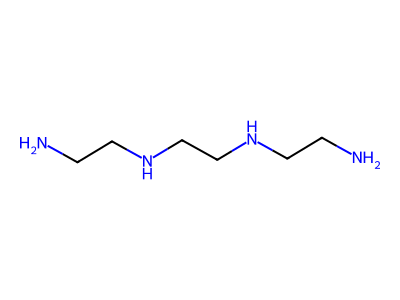
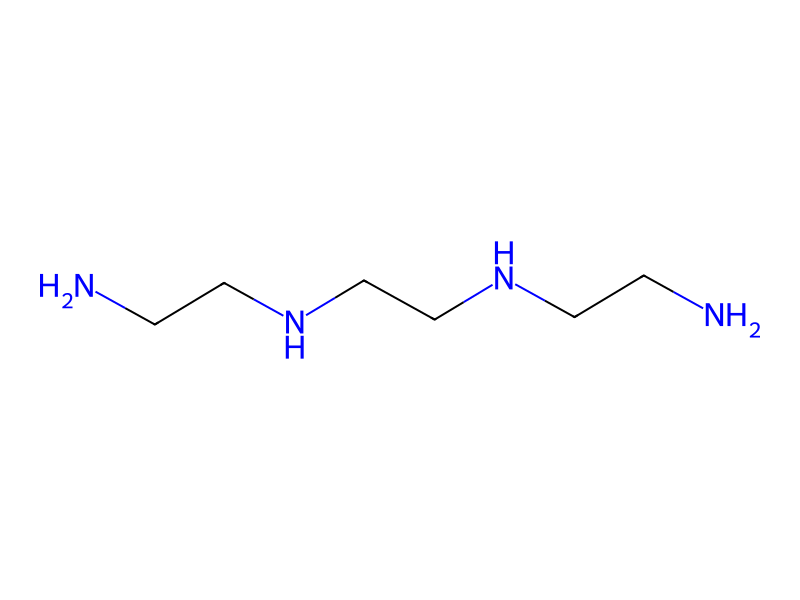
Cite this structure
Embed this structure
SMILES
NCCNCCNCCN
InChI
InChI=1S/C6H18N4/c7-1-3-9-5-6-10-4-2-8/h9-10H,1-8H2
Molecular Formula
C6H18N4
HBD / HBA
4 / 4
พันธะที่หมุนได้
7
อะตอมหนัก
10
No targets recorded
Target interaction data is not yet available for this drug.
No interactions recorded
Drug interaction data is not yet available for this compound.
No side effects recorded
Side effect data is not yet available for this drug.
คำถามที่พบบ่อย
Trientine (triethylenetetramine, TETA) is a polyamine copper-chelating agent that forms stable complexes with copper ions, promoting urinary copper excretion and reducing systemic copper accumulation in Wilson's disease (hepatolenticular degeneration), a genetic disorder of copper metabolism due to ATP7B mutations. It is used as an alternative to penicillamine in patients who are intolerant to or who fail penicillamine therapy. Its chelation of excess hepatic and systemic copper prevents oxidative liver injury and neurological damage characteristic of untreated Wilson's disease.
Forms stable, water-soluble chelate complexes with specific metal ions, facilitating their excretion from the body through the kidneys. This reduces toxic metal burden in affected tissues.
Yes, Trientine is an approved drug. It has reached clinical phase 4. It is classified as a Small molecule.
References & Data Sources
- ChEMBL — European Bioinformatics Institute (EBI). CHEMBL609. Open-access bioactivity database.
- PubChem — National Center for Biotechnology Information (NCBI). CID 5565. Chemical information database.
Data aggregated from publicly available pharmacological databases. Last updated 2026-03-28.
ข้อจำกัดความรับผิดชอบทางการแพทย์
This content is for educational and informational purposes only. It is not a substitute for professional medical advice, diagnosis, or treatment. Always consult a qualified healthcare provider before making medication decisions.
Embed This Widget
Add the script tag and a data attribute to embed this widget.
<script src="https://cdn.jsdelivr.net/npm/drugfyi-embed@1/dist/embed.min.js" defer></script>
<div data-drugfyi="drug" data-slug="trientine"></div>Embed via iframe for maximum compatibility.
<iframe src="https://drugfyi.com/iframe/drug/trientine/" width="420" height="400" frameborder="0" style="border:0;border-radius:10px;max-width:100%" loading="lazy"></iframe>Paste this URL in WordPress, Medium, or any oEmbed-compatible platform.
https://drugfyi.com/drug/trientine/Add a dynamic SVG badge to your README or docs.
[](https://drugfyi.com/drug/trientine/)Use the native HTML custom element.
<script src="https://cdn.jsdelivr.net/npm/drugfyi-embed@1/dist/embed.min.js" defer></script>
<drugfyi-drug slug="trientine"></drugfyi-drug>