Citric Acid
A naturally occurring tricarboxylic acid widely used in pharmaceutical formulations as an acidulant, buffering agent, antioxidant, and chelating agent. It is also used as a urinary alkalinizer in oral solutions to dissolve uric acid and cystine kidney stones. As a component of anticoagulant solutions, it binds calcium to prevent blood clotting during storage.
Molecular Weight
192.1200 g/mol
LogP
-1.70
TPSA
132.00 Ų
Lipinski RO5
Pass
Therapeutic Areas
Pharmacokinetics (PK)
Pharmacodynamics (PD)
2D Structure
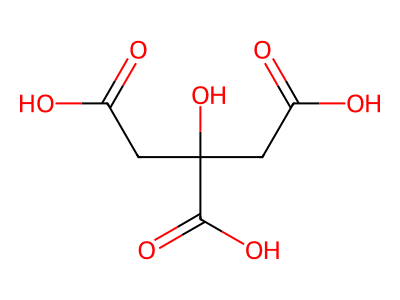
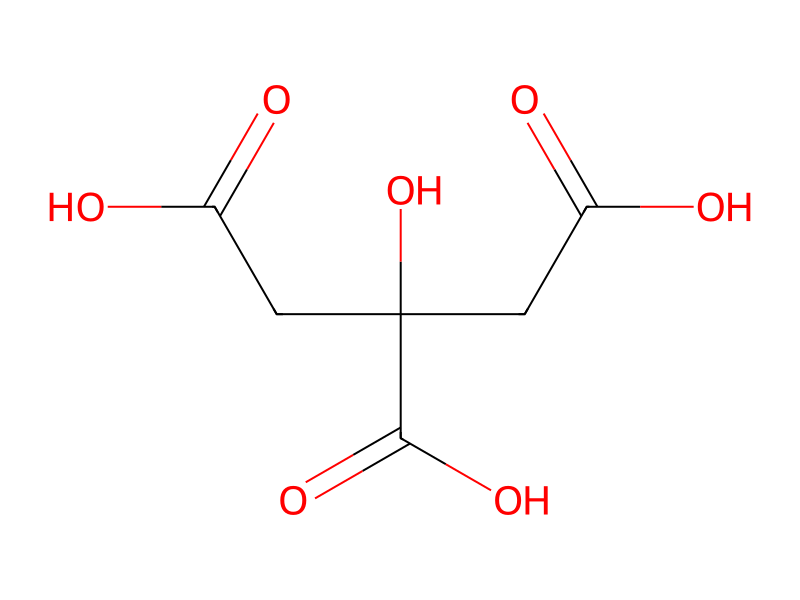
Cite this structure
Embed this structure
SMILES
O=C(O)CC(O)(CC(=O)O)C(=O)O
InChI
InChI=1S/C6H8O7/c7-3(8)1-6(13,5(11)12)2-4(9)10/h13H,1-2H2,(H,7,8)(H,9,10)(H,11,12)
Molecular Formula
C6H8O7
HBD / HBA
4 / 7
Rotatable Bonds
5
Heavy Atoms
13
No targets recorded
Target interaction data is not yet available for this drug.
No interactions recorded
Drug interaction data is not yet available for this compound.
No side effects recorded
Side effect data is not yet available for this drug.
Frequently Asked Questions
A naturally occurring tricarboxylic acid widely used in pharmaceutical formulations as an acidulant, buffering agent, antioxidant, and chelating agent. It is also used as a urinary alkalinizer in oral solutions to dissolve uric acid and cystine kidney stones. As a component of anticoagulant solutions, it binds calcium to prevent blood clotting during storage.
Yes, Citric Acid is an approved drug. It has reached clinical phase 4. It is classified as a Small molecule.
References & Data Sources
- ChEMBL — European Bioinformatics Institute (EBI). CHEMBL1261. Open-access bioactivity database.
- PubChem — National Center for Biotechnology Information (NCBI). CID 311. Chemical information database.
Data aggregated from publicly available pharmacological databases. Last updated 2026-08-20.
Embed This Widget
Add the script tag and a data attribute to embed this widget.
<script src="https://cdn.jsdelivr.net/npm/drugfyi-embed@1/dist/embed.min.js" defer></script>
<div data-drugfyi="drug" data-slug="citric-acid"></div>Embed via iframe for maximum compatibility.
<iframe src="https://drugfyi.com/iframe/drug/citric-acid/" width="420" height="400" frameborder="0" style="border:0;border-radius:10px;max-width:100%" loading="lazy"></iframe>Paste this URL in WordPress, Medium, or any oEmbed-compatible platform.
https://drugfyi.com/drug/citric-acid/Add a dynamic SVG badge to your README or docs.
[](https://drugfyi.com/drug/citric-acid/)Use the native HTML custom element.
<script src="https://cdn.jsdelivr.net/npm/drugfyi-embed@1/dist/embed.min.js" defer></script>
<drugfyi-drug slug="citric-acid"></drugfyi-drug>