Acetohydroxamic Acid
Urease-producing bacteria hydrolyse urea to ammonia, alkalinising the urine and creating the conditions under which struvite kidney stones form; acetohydroxamic acid inhibits that enzyme directly. By blocking urease it removes the alkaline environment the organisms depend upon, curbing both the persistence of chronic urinary infection and the growth of the associated stones. The agent complements antibacterial therapy rather than replacing it, since it suppresses a bacterial enzyme without killing the organism. Its use is accompanied by monitoring for adverse effects including tremor and haemolytic anaemia. Chemically it is among the smallest drugs in clinical use, C2H5NO2 at roughly 75.07 g/mol, and it is approved with development completed through the final phase.
A medication used to treat chronic urinary tract infections caused by bacteria that produce urease, an enzyme that breaks down urea and makes the urine alkaline, allowing kidney stones to form. By blocking urease, it prevents the bacteria from creating the alkaline environment they need to thrive and reduces the growth of certain types of kidney stones. It is typically used as a complement to antibiotics, not as a replacement, and requires monitoring for side effects including tremors and anemia.
Peso molecular
75,0700 g/mol
LogP
-1,60
TPSA
49,30 Ų
Regla de cinco de Lipinski
Cumple
Áreas terapéuticas
Mecanismo de acción
Inhibits bacterial urease, the enzyme that hydrolyzes urea to ammonia and carbon dioxide, reducing the alkalinization of urine that promotes stone formation and infection persistence.
Pharmacokinetics (PK)
Pharmacodynamics (PD)
Inhibits bacterial urease, the enzyme that hydrolyzes urea to ammonia and carbon dioxide, reducing the alkalinization of urine that promotes stone formation and infection persistence.
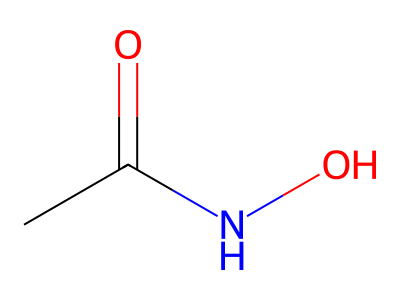
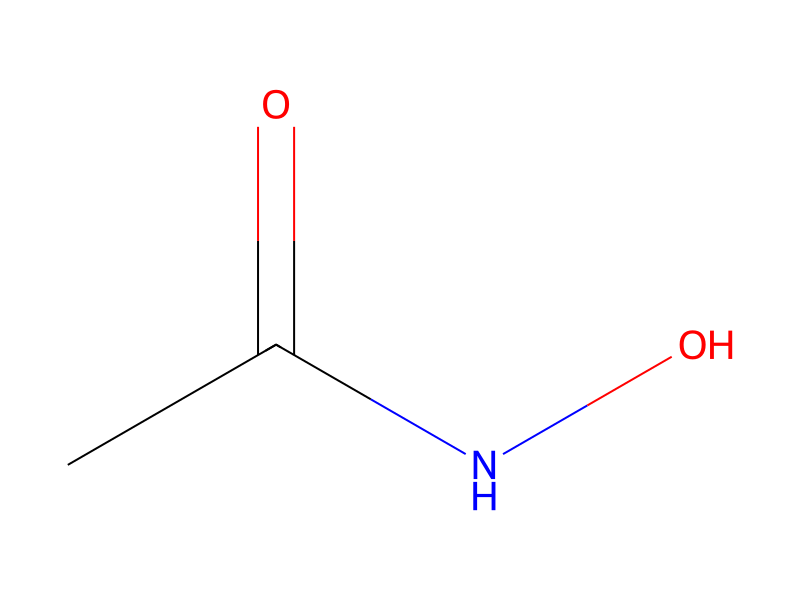
Estructura 2D
Cite this structure
Embed this structure
SMILES
CC(=O)NO
InChI
InChI=1S/C2H5NO2/c1-2(4)3-5/h5H,1H3,(H,3,4)
Molecular Formula
C2H5NO2
HBD / HBA
2 / 2
Enlaces Rotables
0
Átomos Pesados
5
No targets recorded
Target interaction data is not yet available for this drug.
No interactions recorded
Drug interaction data is not yet available for this compound.
No side effects recorded
Side effect data is not yet available for this drug.
Preguntas frecuentes
A medication used to treat chronic urinary tract infections caused by bacteria that produce urease, an enzyme that breaks down urea and makes the urine alkaline, allowing kidney stones to form. By blocking urease, it prevents the bacteria from creating the alkaline environment they need to thrive and reduces the growth of certain types of kidney stones. It is typically used as a complement to antibiotics, not as a replacement, and requires monitoring for side effects including tremors and anemia.
Inhibits bacterial urease, the enzyme that hydrolyzes urea to ammonia and carbon dioxide, reducing the alkalinization of urine that promotes stone formation and infection persistence.
Yes, Acetohydroxamic Acid is an approved drug. It has reached clinical phase 4. It is classified as a Small molecule.
References & Data Sources
- ChEMBL — European Bioinformatics Institute (EBI). CHEMBL734. Open-access bioactivity database.
- PubChem — National Center for Biotechnology Information (NCBI). CID 1990. Chemical information database.
Data aggregated from publicly available pharmacological databases. Last updated 2026-08-20.
Embed This Widget
Add the script tag and a data attribute to embed this widget.
<script src="https://cdn.jsdelivr.net/npm/drugfyi-embed@1/dist/embed.min.js" defer></script>
<div data-drugfyi="drug" data-slug="acetohydroxamic-acid"></div>Embed via iframe for maximum compatibility.
<iframe src="https://drugfyi.com/iframe/drug/acetohydroxamic-acid/" width="420" height="400" frameborder="0" style="border:0;border-radius:10px;max-width:100%" loading="lazy"></iframe>Paste this URL in WordPress, Medium, or any oEmbed-compatible platform.
https://drugfyi.com/drug/acetohydroxamic-acid/Add a dynamic SVG badge to your README or docs.
<a href="https://drugfyi.com/drug/acetohydroxamic-acid/" rel="nofollow noopener"><img src="https://drugfyi.com/badge/entity/acetohydroxamic-acid.svg" alt="DrugFYI"></a>Use the native HTML custom element.
<script src="https://cdn.jsdelivr.net/npm/drugfyi-embed@1/dist/embed.min.js" defer></script>
<drugfyi-drug slug="acetohydroxamic-acid"></drugfyi-drug>